
What to look for when viewing a house: a UK buyer's checklist
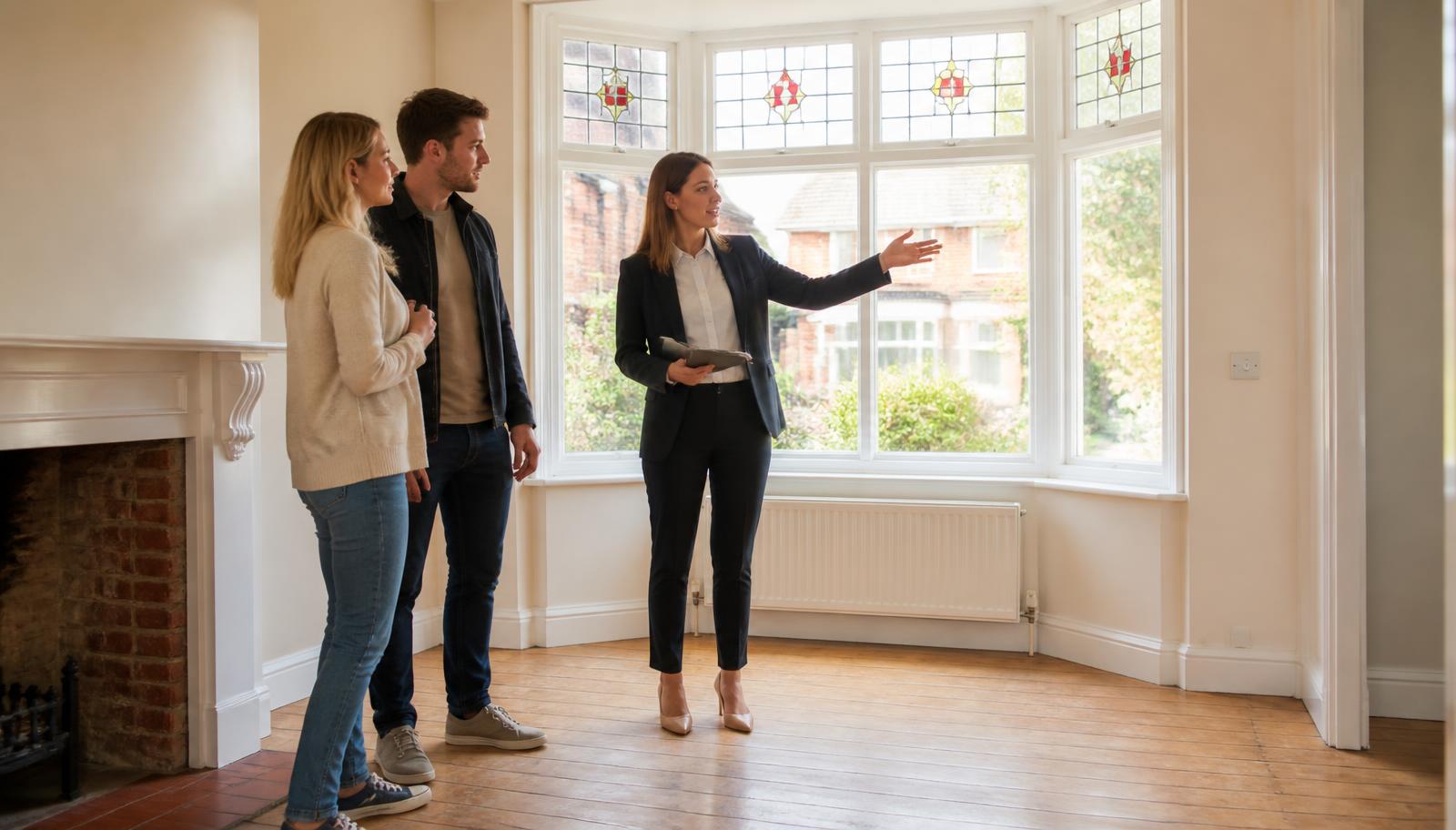
A viewing usually lasts twenty to thirty minutes, and most buyers spend it looking at the decoration. The things that cost money later — damp, the roof, the heating, the windows, the noise outside — take a few minutes each to check if you know what you are looking for. Use the checklist below, take photos as you go, and see the property twice before you offer.
- Book the first viewing in daylight and the second at a different time of day.
- Damp, cracks, the roof and the windows are the four checks that most often change a decision.
- Run a tap, look in the loft, open cupboards, and ask when the boiler was last serviced.
- Step outside and look at the street, the parking and the neighbouring properties.
- Nothing you see at a viewing replaces a RICS survey — it tells you whether to pay for one.
What should you do before the viewing?
Read the listing carefully, check the Energy Performance Certificate, and look at what the property and its neighbours have sold for. You will ask far better questions.
The EPC is free to search on GOV.UK and usually gives the floor area, the heating type and the construction of the walls and roof. Sold prices for England and Wales are published by HM Land Registry. Our guide to researching a house before buying it runs through the free checks worth doing first.
Condition: what to look at inside
Look for damp, cracking, tired windows, and the age and condition of the heating and electrics. Those four things account for most unwelcome post-survey conversations.
Signs of damp
- A musty smell, especially in a room that has been shut up or in a ground-floor corner.
- Tide marks or staining low on walls (rising damp) or high near ceilings and chimney breasts (penetrating damp or a roof leak).
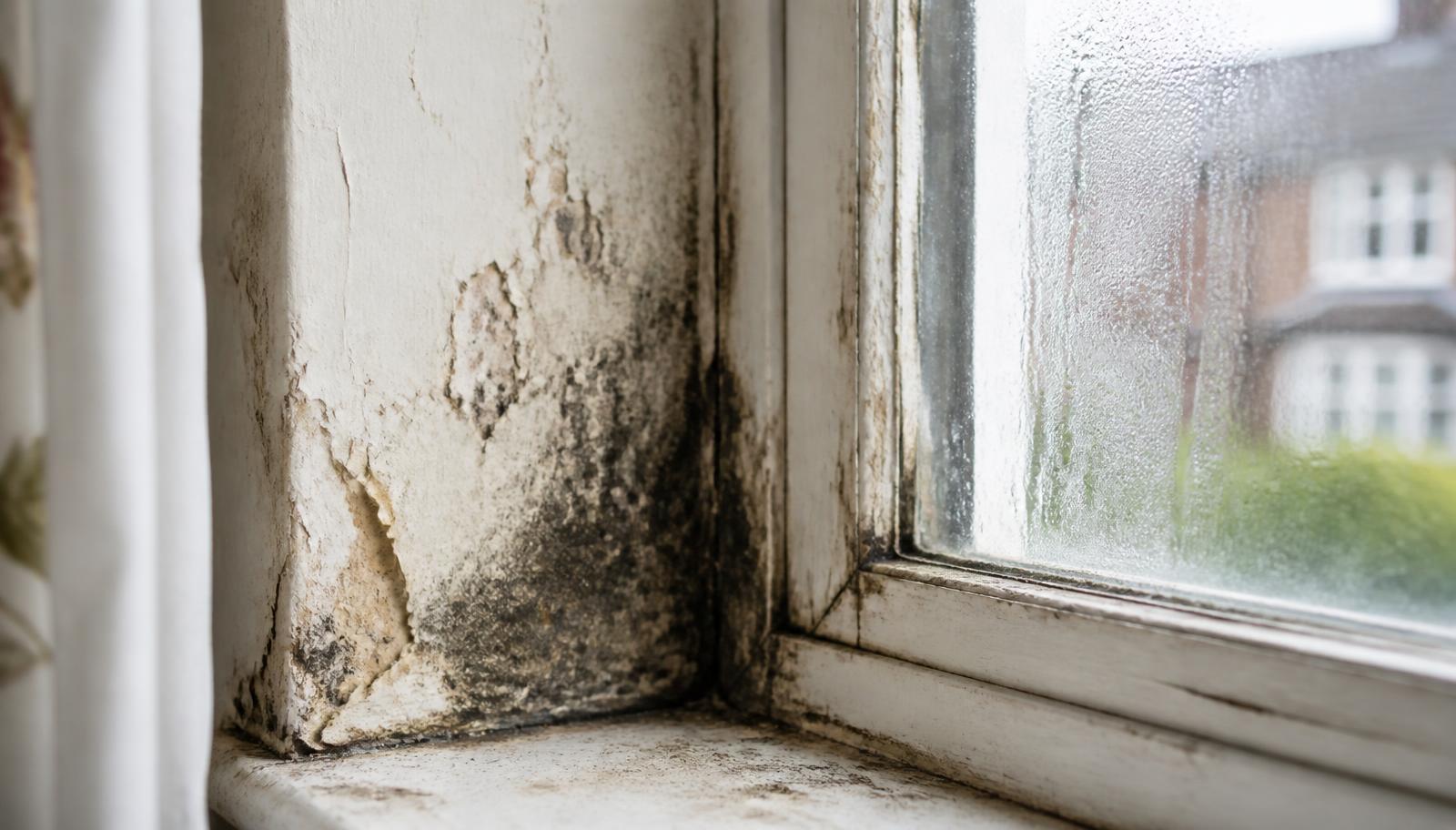
- Black mould around window reveals and in bathroom corners — often condensation and poor ventilation rather than a structural fault, but still a cost.
- Peeling or bubbling paint, blown plaster, and skirting boards that feel soft.
- Freshly painted patches on one wall only, or furniture placed oddly against a wall.
- Blocked or painted-over air bricks outside, and ground level built up above the damp-proof course.
Cracks and possible structural movement
Fine hairline cracks in plaster are usually settlement or shrinkage. Cracks wider than about 5mm, diagonal cracks near openings, and cracks that continue through brickwork outside deserve a structural opinion.
Look at both faces of the same wall, check whether doors and windows still close squarely, and look outside for stepped cracking following the mortar joints. Say what you saw when you instruct a surveyor — a Level 2 or Level 3 RICS survey can be targeted at your specific concerns.
Windows and doors
- Open and close several windows. Sticking casements can mean movement, rot or a poor installation.
- Look for misting between double-glazed panes — the seal has failed and the unit needs replacing.
- Check for rot at the bottom of timber frames and sills, and soft spots around external door frames.
- Ask the age of the glazing and whether there is a FENSA or equivalent certificate.
- Check external doors close and lock properly, and note the standard of the locks.
Heating, water and electrics
- Find the boiler, note the make and rough age, and ask when it was last serviced and whether the service record is available.
- Turn on a hot tap upstairs and check both temperature and pressure. Then flush a toilet and run the tap together to see how the pressure holds.
- Turn a radiator on if you can, and feel whether it heats evenly.
- Look at the consumer unit. An old fuse box with rewireable fuses suggests the wiring may be due an inspection.
- Count sockets per room — a shortage is cheap to notice and expensive to fix well.
- Ask whether there is a recent Electrical Installation Condition Report (EICR) and a gas safety record.
Roof, loft and exterior
- From the pavement, look for slipped, missing or patched tiles, sagging in the ridge line and vegetation in the gutters.
- Check the chimney stack, flashing and the pointing on the brickwork.
- Look for staining down external walls under gutters and downpipes — usually a leak.
- Ask to look into the loft. Daylight through the roof, damp timbers, and thin or missing insulation are all worth noting.
- Look at flat roofs on extensions and dormers — they have a much shorter life than a pitched roof.
Storage, light, noise and the things you live with
These rarely appear on a survey but decide whether you enjoy the house. Check them deliberately rather than absorbing them by accident.
- Storage: open cupboards, look under the stairs, check whether the loft is boarded and whether there is anywhere to put a hoover, a buggy or bicycles.
- Natural light: note which way the main rooms face and at what time of day the garden gets sun. A compass app answers this in seconds.
- Noise: stand still in the quietest room and just listen. Traffic, a railway line, a pub, a school run, a flight path or a noisy boiler all show up if you stop talking.
- Mobile signal: check the bars in the room you would work in, not just by the front door. Ofcom publishes a coverage checker by address.
- Broadband: check the postcode on the Openreach or Ofcom availability checkers before you assume full fibre is there.
- Parking: is it allocated, permit-only, or a free-for-all? Look at how full the street is at the time you visit.
- Water pressure, mould in the bathroom, extractor fans, and where the washing machine goes.
Ofcom's mobile and broadband checker covers coverage by postcode and address across the UK.
“My best piece of advice when house hunting is to visit the property at different times of the day and see what the surrounding area is like. Is it particularly noisy at a certain time of day? You only find that out by being there.”
Look beyond the property itself
You are buying the street as much as the house. Walk the road in both directions before you leave.
- Condition of neighbouring properties — scaffolding, skips and new extensions all tell you something.
- Whether nearby homes are owner-occupied, rented or holiday lets.
- Bins, hedges, shared drives and anything that looks like a boundary dispute waiting to happen.
- Vacant land, hoardings or a site notice tied to a lamp post — that is a live planning application.
- How the road behaves: is it a rat run, is it on a bus route, does the school run block it?
This is where PicAHome is useful. PicAHome is a free UK app that identifies a home from a photo taken while you are outside it, or from a postcode, and shows what is publicly known about it — including its previous sold prices from HM Land Registry data and, where the property is currently listed, its asking price. Walking a street after a viewing, you can point your phone at the houses either side and see what they last sold for, instead of writing down addresses to look up later.
Research nearby prices and previous sold prices
Compare the asking price with what similar homes on the same street and nearby streets actually sold for. Sold prices are fact; asking prices are an opening position.
Match property type, size and condition, and prefer recent sales. Our guides to house prices on your street and asking price versus sold price explain how to read the difference. If you want the property's own history, see how to find out how much a house sold for.

Questions to ask the estate agent
Ask about the seller's position, the property's history and anything the listing avoids. Agents act for the seller, but they must not mislead you.
- How long has it been on the market, and has the price been reduced?
- Has a sale fallen through, and if so why?
- Why is the seller moving, and what is their chain position and timescale?
- Freehold or leasehold? If leasehold: years remaining, ground rent, service charge and any planned major works.
- Which parts have been extended or converted, and is there planning permission and building regulations sign-off?
- How old are the boiler, roof, wiring and windows?
- Has there been any damp, subsidence, flooding or an insurance claim?
- Are there shared drives, rights of way, covenants or boundary issues?
- What is the council tax band, and roughly what are the running costs?
- How much interest has there been, and have any offers been made?
The viewing checklist
Run through these in order. Ten minutes inside, five in the loft and garden, five on the street.
| Where | Check |
|---|---|
| Outside, front | Roof tiles, ridge line, chimney, gutters, pointing, window frames, ground level against the wall, parking, street condition. |
| Hallway and stairs | Storage, damp smell, cracks above doorways, meter locations. |
| Living rooms | Orientation and light, noise with everyone quiet, sockets, chimney breast staining, condition of floors. |
| Kitchen | Water pressure, under-sink leaks, extractor, appliance space, worktop condition. |
| Bathrooms | Hot water speed and pressure, sealant and grout, ventilation, mould in corners. |
| Bedrooms | Will your bed actually fit, wardrobe space, window operation and misting, damp on external walls. |
| Loft | Daylight through the roof, insulation depth, damp or stained timbers, water tank, boarding. |
| Services | Boiler age and service history, consumer unit, radiators, stopcock location. |
| Garden and rear | Boundaries and fences, drainage and standing water, outbuildings, overlooking, extension roof condition. |
| The street | Neighbouring properties, parking pressure, traffic, planning notices, sold prices nearby. |
What to check after the viewing
Do the paperwork checks the same evening while the property is fresh in your mind, then book a second viewing at a different time of day.
- Sold price history for the property and recent sales on the street.
- Planning applications at the address and on neighbouring land, via the council's planning portal — find the right council on GOV.UK.
- Flood risk, using the GOV.UK long term flood risk service for England and the equivalents for Wales, Scotland and Northern Ireland.
- Council tax band on GOV.UK, then the council's own charge for that band.
- Broadband and mobile coverage at the postcode.
- Your own photos, reviewed properly — problems are far more visible on a big screen than in the room.
Then, if you still like it, view again on a different day and at a different hour, and walk the area properly before you offer — our guide to researching an area before buying covers what to look for.
None of this replaces professional advice. A RICS survey assesses condition, and a conveyancer handles searches, title and the legal position. What a good viewing does is tell you which house is worth paying them to investigate.
Frequently asked questions
What should I look for when viewing a house in the UK?
How do I spot damp when viewing a property?
Are cracks in a house a problem?
How long should a house viewing take?
What questions should I ask the estate agent at a viewing?
Should I view a house twice before making an offer?
Can I find out what the houses nearby sold for?
Does a viewing replace a survey?
Seen a home you're curious about?
Point. Discover. Know.
Download PicAHome and start discovering the properties around you. Free, with unlimited Discoveries on a free account.
Scan to download PicAHome and start discovering.
Keep reading
How to get alerts when a house comes up for sale
Portal alerts, local agents and street notifications each catch different opportunities. Here's how to set them up without getting buried in listings.
Read articleI've seen a house I like, but it's not for sale. What can I do?
Research it properly, register with the agents who sell on that street, write once to the owner, and set an alert on the road. What works, and what doesn't.
Read articleHow to research an area before buying a house
Visit at different hours, walk rather than drive, and run the free official checks — a practical guide to judging a UK area before you commit to buying there.
Read article