
I've seen a house I like, but it's not for sale. What can I do?
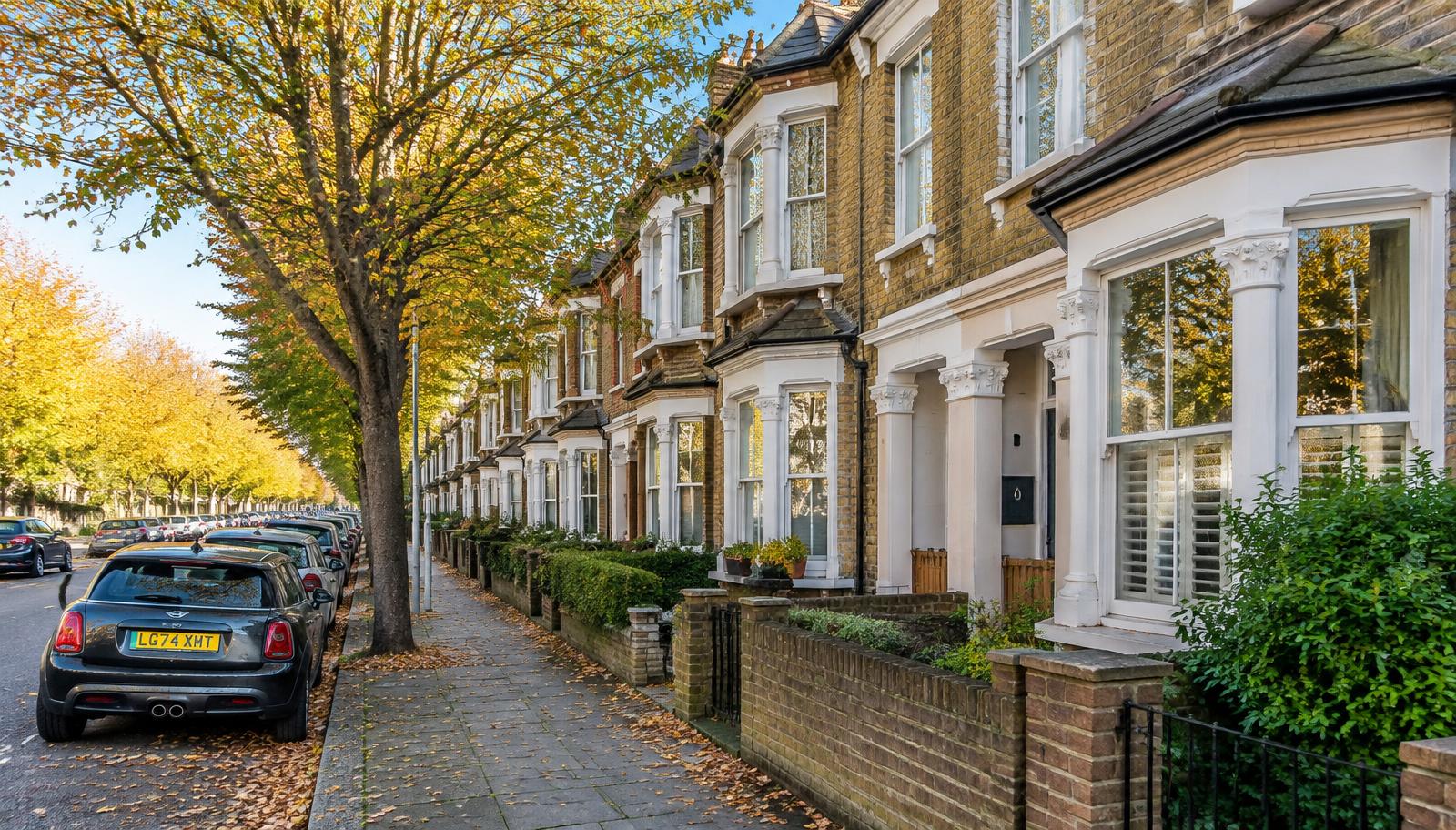
If a house you like is not for sale, you have four realistic options: register with the estate agents who cover that street, research the property properly so you are ready if it ever comes up, write once to the owner, or set an alert on the road so you hear the moment something is listed. Most buyers get the home they want through the last two, not the letter.
- A house that is not advertised is not necessarily unavailable, but the owner is under no obligation to sell or reply.
- Sold price history, planning applications, EPC and council tax band are public whether or not a home is on the market.
- Agents who work a street hear about sales before the portals do, so being on their list matters.
- Watching a road is usually more productive than waiting for one specific house.
- In PicAHome you can research any home you walk past and set alerts on the roads you care about.
Why is the house not listed?
Either the owner is not selling, or the sale is happening quietly. Off-market and pre-launch sales never reach a portal, so an empty search result does not always mean an empty market.
Before you assume the house is unavailable, check the agents who cover the street as well as the portals. Our guide to finding out if a house is for sale runs through the checks worth making first.
What can I actually do?
1. Register with the local agents, specifically
Tell two or three agents the exact street, the type of house and the budget. Buyers who say "three bed, nice area" get ignored. Buyers who say "anything on Shakespeare Road up to £480,000, proceedable" get a phone call. Registering costs nothing and there is no reason to limit yourself to one agent.
2. Research the property now, not later
Everything public about a home is available while it sits quietly not being sold. Sold price history from HM Land Registry, planning applications on the council's portal, the EPC, the council tax band, flood risk. Doing this early means that if the house appears on a Friday afternoon you already know what it last sold for and whether that loft conversion had permission. Our guide to researching a house before buying covers the detail.
3. Write to the owner, once
A short, honest letter through the door is legal and not unusual. Say who you are, that you like the house, and that you will not write again. Give a phone number and leave it there. No repeat letters, no knocking, no notes about how much you would pay. Owners occasionally are thinking about selling and have not started, and that is the only situation where the letter works.
4. Widen from one house to one road
Fixing on a single property is the slowest route. Fixing on a street, or a handful of streets, is usually how people end up living where they wanted to live.
Houses on the same road tend to share the plot sizes, the period, the parking, the school catchment and the noise profile that made you like the one you saw. Comparing neighbouring roads is worth the hour: our guide to researching an area before buying explains what to look at.
Where PicAHome fits
PicAHome is a free app for England and Wales. Point your phone at a house and it identifies the property, then brings together what it last sold for, its earlier sales, property details and what is currently on the market nearby. You do not need the address, and you do not need to write anything down while standing on the pavement.
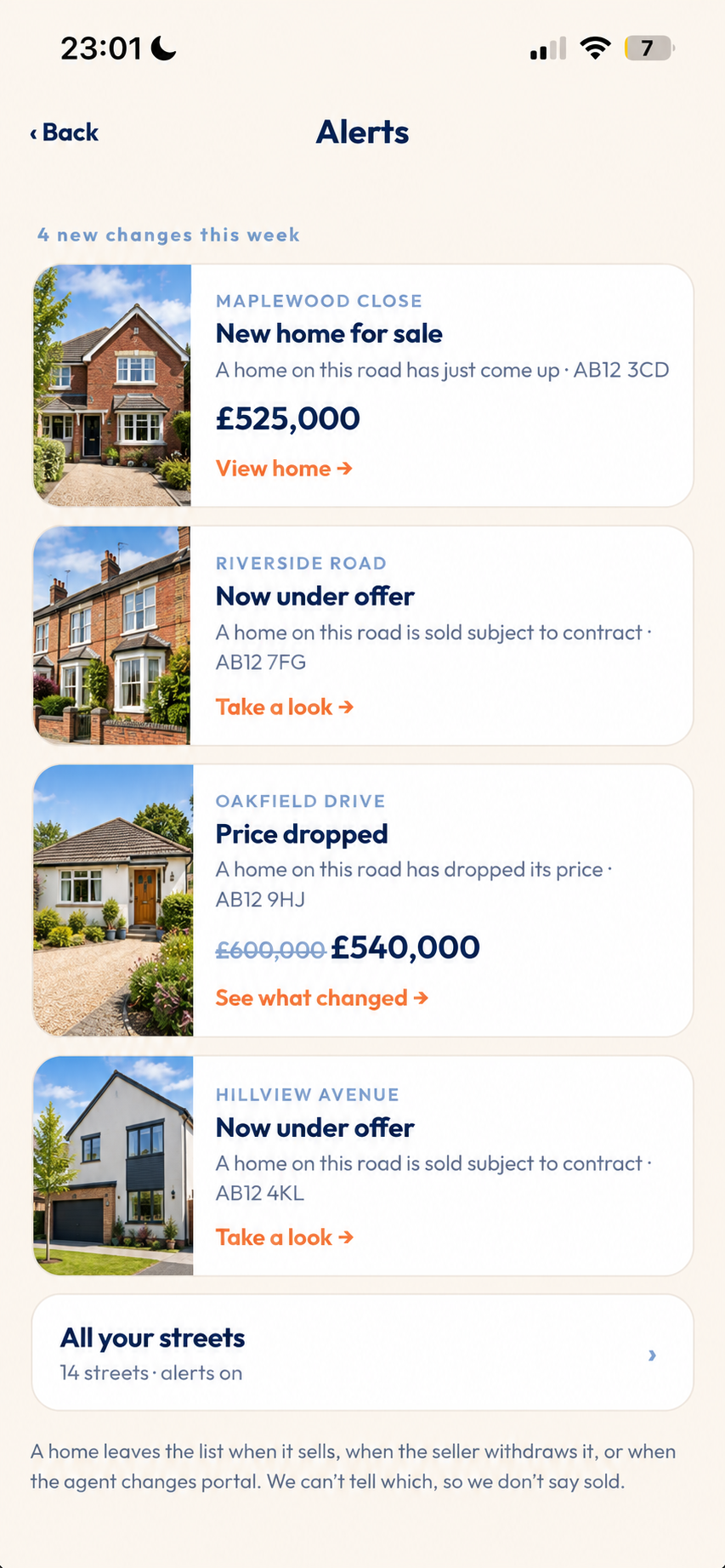
For the situation in this article, the useful part is watching a road. Save the homes and streets you are interested in, and if a property on a watched road comes onto the market you get an alert. That turns "I like that house" into something you can act on without checking portals every evening.
Should I make an offer on a house that is not for sale?
You can, but only after the owner has shown some interest in selling. An unsolicited figure pushed through the door of someone who is not selling usually ends the conversation rather than starting it.
If an owner does respond, treat it as a normal purchase. They will want their own valuation advice and you will still want a survey and a conveyancer. Without an agent in the middle there is nobody managing the chain, so be realistic about timescales.
Can I find out who owns the house?
For registered property in England and Wales, yes. The title register names the registered owner and can be bought for a small fee from HM Land Registry.
Buy it through the GOV.UK land and property information service. It is a public record intended for legitimate property research. Some older property is unregistered and will not appear, and Scotland and Northern Ireland maintain separate registers.
A short plan
- Confirm it really is not on the market, including the agents' own sites.
- Look up the sold price history and planning record now.
- Register with the agents who sell on that street, naming the street.
- Save the property and set an alert on the road.
- Write once to the owner if the house genuinely is the only one you want.
- Keep viewing similar homes nearby so you know what the price should be when it appears.
Frequently asked questions
Can I find out if a house might be for sale?
How can I find out when a house comes onto the market?
Can I set an alert for one particular street?
How can I research a house that isn't for sale?
Can I find previous sold prices for a house?
Is it acceptable to write to a homeowner asking if they would sell?
How long should I wait for a house to come up?
Seen a home you're curious about?
Point. Discover. Know.
Download PicAHome and start discovering the properties around you. Free, with unlimited Discoveries on a free account.
Scan to download PicAHome and start discovering.
Keep reading
How to research an area before buying a house
Visit at different hours, walk rather than drive, and run the free official checks — a practical guide to judging a UK area before you commit to buying there.
Read articleWhat to look for when viewing a house: a UK buyer's checklist
Damp, cracks, the roof, water pressure, noise and parking — a room-by-room checklist for UK house viewings, and the questions worth asking the agent.
Read articleCan you find a house online just from a photo?
Visual search identifies images. Property discovery identifies a home and the records attached to it. Here's the difference, and what you can actually find from a photo.
Read article